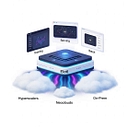
FinOps Automation Platform
What is FinOps Automation Platform?
FinOps Automation Platform is an integrated software environment that automates cloud financial operations to manage, optimize, and govern cloud spending across providers, business units, and workloads in alignment with FinOps practices and organizational policies.
Expanded Explanation
1. Technical Function and Core Characteristics
A FinOps Automation Platform ingests billing, usage, and asset metadata from cloud service providers and related tools, then normalizes and enriches this data for analysis, allocation, and policy enforcement. The platform typically applies rules, workflows, and recommendations to automate cost allocation, anomaly detection, rightsizing, and scheduling of cloud resources. It often includes role-based dashboards, alerting, and APIs that support integration with ticketing, Continuous Integration and Continuous Deployment (CI/CD) pipelines, and configuration management for closed-loop automation of cloud cost controls.
Show more
These platforms usually support multi-cloud and hybrid environments by consolidating cost and usage data from Infrastructure-as-a-Service (IaaS), Platform-as-a-Service (PaaS), and Software-as-a-Service (SaaS) offerings. They align with FinOps principles by enabling visibility, shared accountability, and iterative optimization across engineering, finance, and business teams without replacing existing cloud provider billing systems.
2. Enterprise Usage and Architectural Context
Enterprises use a FinOps Automation Platform as a central layer in their cloud management stack, alongside cloud management platforms, IT service management systems, and security and compliance tooling. The platform commonly connects to cloud provider billing exports, usage APIs, identity and access management systems, tagging or labeling schemes, and data warehouses used for financial and operational reporting.
Architects position the platform to support showback and chargeback, budget tracking, policy-based governance of resource configurations, and automated remediation actions such as instance resizing or decommissioning unused assets. It often integrates with organizational financial systems to reconcile cloud invoices, allocate costs to cost centers or products, and support forecasting and planning processes.
3. Related or Adjacent Technologies
A FinOps Automation Platform relates to cloud cost management and optimization tools, cloud management platforms, IT financial management systems, and observability platforms that collect performance telemetry. It also connects with configuration management databases, Infrastructure-as-Code (IaC) pipelines, and cloud governance tools that enforce policies for security, compliance, and resource configuration.
While traditional IT financial management tools focus on capital and operational expenditures across on-premises (on-prem) and cloud, FinOps Automation Platforms concentrate on variable, usage-based cloud consumption. They often interoperate with monitoring and Application Performance Management (APM) tools so that performance and reliability requirements inform automated cost-optimization decisions.
4. Business and Operational Significance
For enterprises, a FinOps Automation Platform supports control of cloud spending and alignment of cloud consumption with business value by systematizing and automating FinOps practices. It enables finance, technology, and product teams to work from a shared data model and policy framework for cloud costs.
Operational teams use the platform to implement continuous cost optimization, enforce budget thresholds, and ensure that engineering changes comply with financial and governance policies. This supports auditability of cloud spend, improves forecasting of consumption-based charges, and reduces manual effort associated with cloud billing analysis and cost remediation.
Our definition.