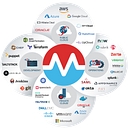
multi domain controller market
What is multi domain controller market?
A multi domain controller market is the commercial landscape for technologies and vendors that provide control, coordination, and policy management platforms across multiple network or technology domains within telecom, cloud, or enterprise infrastructures.
Expanded Explanation
1. Technical Function and Core Characteristics
A multi domain controller market centers on platforms that coordinate resources and services across distinct network or technology domains, such as IP, optical, radio access, core, and cloud. These controllers typically expose standardized APIs, maintain topology and service models, and implement end-to-end policies across domains. They commonly support functions including multi-layer path computation, orchestration of services, lifecycle management, and closed-loop automation in heterogeneous environments.
Show more
In telecom contexts, multi domain controllers operate above domain-specific controllers to manage transport, access, and core networks under a unified policy framework. In cloud and enterprise settings, they may integrate Software Defined Networking (SDN), security, and application delivery controllers to provide consolidated control for connectivity, Quality of Service (QoS), and security policies.
2. Enterprise Usage and Architectural Context
Enterprises and service providers use multi domain controller platforms to coordinate service provisioning, capacity management, and fault handling across multiple operational domains. These platforms support intent-based or policy-driven workflows that map business requirements to technical configurations in each domain. They also support integration with Operations Support System (OSS), Business Support System (BSS), and IT service management tools through northbound interfaces.
Architecturally, multi domain controllers often System Integration Testing (SIT) in an orchestration or service management layer and interface with SDN controllers, Network Functions Virtualization (NFV) orchestrators, security controllers, and cloud management systems. This position enables cross-domain visibility, correlation of telemetry data, and enforcement of common policies for latency, bandwidth, security posture, and service assurance.
3. Related or Adjacent Technologies
Multi domain controller markets relate closely to SDN controllers, network orchestration systems, and transport SDN platforms that operate within single domains. They also intersect with NFV management and orchestration, cloud-native orchestration, and service orchestration frameworks defined by standards bodies. In addition, they align with network automation tools that use model-driven approaches and standardized data models.
These markets also connect to assurance and analytics platforms that supply telemetry and performance data into multi domain controllers for closed-loop control. Integration with security orchestration, automation and response platforms and zero trust architectures ties multi domain control to security policies that span multiple network and cloud domains.
4. Business and Operational Significance
The multi domain controller market matters for network operators and enterprises that run distributed infrastructures across multiple technologies and administrative boundaries. Vendors in this market aim to reduce manual coordination across teams, shorten service delivery times, and support cross-domain service-level objectives. Buyers evaluate capabilities such as multivendor interoperability, standards compliance, scalability, and integration with existing operational support systems.
From an operational standpoint, multi domain controllers can support more consistent policy enforcement, structured change management, and automated response to network events across domains. For business stakeholders, these platforms provide mechanisms to align connectivity and security services with product offerings, internal service catalogs, and contractual Service Level Agreements (SLAs) that span diverse network and cloud environments.
Our definition.