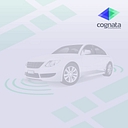
Pedestrian Detection System
What is Pedestrian Detection System?
A pedestrian detection system is a sensor- and algorithm-based safety technology that identifies people in or near a vehicle’s path or monitored area and enables warning, driver support, or automated intervention to reduce collision risk.
Expanded Explanation
1. Technical Function and Core Characteristics
A pedestrian detection system uses cameras, radar, lidar, or sensor fusion with Machine Learning (ML) or computer vision models to detect and classify pedestrians in real time. It estimates position, distance, and motion of detected persons relative to the host vehicle or device. The system generates alerts, visual markers, or control outputs when it predicts possible collision trajectories, and in some implementations actuates automatic emergency braking or speed reduction functions.
Show more
Core characteristics include real-time image or signal processing, object classification, tracking across frames, and operation across varied lighting and weather conditions. Many systems integrate with advanced driver assistance, collision avoidance, and active safety control units through in-vehicle networks or embedded controllers.
2. Enterprise Usage and Architectural Context
Enterprises deploy pedestrian detection systems in passenger vehicles, commercial fleets, public transportation, robotics, industrial equipment, and smart city infrastructure. In automotive contexts, the function commonly integrates with advanced driver assistance architectures that include forward collision warning, lane keeping, and adaptive cruise control. System components often run on embedded system-on-chip platforms or edge compute modules with dedicated accelerators for Neural Network (NN) inference.
From an architectural perspective, pedestrian detection forms part of a perception stack that ingests sensor data, applies detection and tracking algorithms, and hands off structured outputs to decision-making and control layers. Integration points include vehicle CAN or Ethernet networks, over-the-air update services, data logging systems, and, in some enterprise deployments, back-end analytics platforms for safety monitoring and MLM.
3. Related or Adjacent Technologies
Pedestrian detection systems relate closely to forward collision warning, automatic emergency braking, lane departure warning, and blind spot monitoring functions that operate on overlapping sensor inputs. They also align with broader computer vision and automated driving technologies that perform object detection, semantic segmentation, and scene understanding for vehicles and mobile robots.
Adjacent technologies include intelligent transportation systems, roadside sensing units, and video analytics platforms used in traffic management and surveillance. In some deployments, pedestrian detection algorithms run in smart cameras or edge gateways that support additional features such as vehicle counting or congestion monitoring.
4. Business and Operational Significance
For enterprises, pedestrian detection systems support safety performance objectives, compliance with regional vehicle safety regulations, and alignment with automotive safety assessment protocols that evaluate pedestrian protection capabilities. Fleet operators and mobility providers use such systems to reduce collision incidents involving pedestrians and to support risk management strategies.
The technology also creates data relevant for safety analytics, incident reconstruction, and model performance evaluation within functional safety and cybersecurity frameworks. In industrial and logistics environments, pedestrian detection on mobile equipment and robots supports separation between people and machines and informs enterprise safety policies and system design.
Our definition.