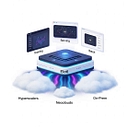
Cluster Dashboard
What is Cluster Dashboard?
A cluster dashboard is a visual interface that presents consolidated, real-time metrics, status, and configuration data for a compute or data-processing cluster to support monitoring, troubleshooting, and operational decision-making.
Expanded Explanation
1. Technical Function and Core Characteristics
A cluster dashboard aggregates telemetry from nodes, workloads, and control planes in a clustered environment, such as a Kubernetes, Hadoop, or High performance computing (HPC) cluster. It typically displays resource utilization, health indicators, topology, events, and alerts in near real time. Many implementations offer drill-down views, role-based access, and configurable widgets so operators can inspect specific namespaces, services, queues, or jobs while maintaining visibility of overall cluster state.
Show more
2. Enterprise Usage and Architectural Context
Enterprises use cluster dashboards as part of their observability stack to monitor service availability, performance, and capacity for container platforms, big-data frameworks, and clustered databases. They commonly integrate with logging, metrics, and tracing back ends, such as time-series databases and distributed log systems, to query and visualize operational data. Architects position these dashboards within network operations centers and platform engineering toolchains to support incident response, change validation, and capacity planning workflows.
3. Related or Adjacent Technologies
Cluster dashboards relate to observability platforms, application performance monitoring tools, and infrastructure monitoring systems. In Kubernetes environments, they often integrate with or extend native dashboards that expose cluster objects and metrics through the Kubernetes Application Programming Interface (API). In data platforms, dashboards may connect to resource managers and schedulers, such as YARN or Mesos, and to cluster management frameworks that expose job status, queue metrics, and node health.
4. Business and Operational Significance
For enterprises, a cluster dashboard supports operational continuity by giving teams a consolidated view of cluster health, performance, and capacity. It helps site reliability, operations, and platform teams detect anomalies, validate deployments, and enforce service-level objectives. Leadership and product teams also use surfaced metrics to understand infrastructure utilization patterns, inform budgeting, and align platform capacity with application demand.
Our definition.